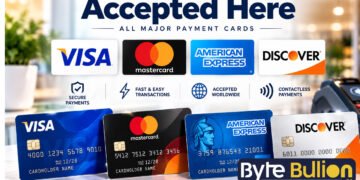



Visa, Mastercard, Amex, and Discover are the four major card networks in the United States, and they are often confused with the banks whose names appear on your card. This guide explains the difference in plain words. You will learn what a network does, what an issuer does, why American Express and Discover work differently from Visa and Mastercard, how acceptance and fees play a part, and how to choose a card without falling for myths. The goal is simple. By the end, you should know what the logo in the corner of your card means and which details matter when you decide which card to carry or accept in a shop.
Networks and Issuers Are Not the Same Thing
Two different companies are usually involved with each card. The issuer is the bank or lender that gives you the card and manages your account. Chase, Citi, and Wells Fargo are examples. The network is the system that connects the shop, the shop’s bank, and your issuer so that a payment can be approved and settled.
NerdWallet explains that the network verifies the card with the issuer and makes sure the payment reaches the merchant’s bank. Merchants do not have to sign deals with thousands of issuers. They work with the networks, and a network handles dealings with the issuing banks. A store that accepts Visa can take a Visa card from any issuer. You can read the full explanation in NerdWallet’s guide to the four networks.
Visa and Mastercard: Networks Only
Visa and Mastercard are networks that do not lend money themselves. They do not decide your credit limit, set your interest rate, or send you a bill. Banks and credit unions do those things. When you hold a Chase Visa or a Citi Mastercard, the bank is the issuer, and the logo shows which network moves your payment.
Because of this setup, the choice of Visa or Mastercard says little about the quality of the card. The rewards, fees, and protections mostly come from the issuer, though some benefits are tied to the network level and the card tier. Capital One makes a similar point, saying that the rules and benefits of a card depend on both the issuer and the network, and that the network matters most for where the card is accepted and for some extra perks. See Capital One’s comparison of Visa, Mastercard, and Discover for more.
American Express and Discover: Network and Issuer
American Express and Discover are different, because they are both a network and an issuer. NerdWallet states that these two companies issue cards, and they also process transactions, which gives them a bigger share of the fee revenue. In other words, when you hold an Amex card from American Express, the same company runs the network and manages your account.
This is sometimes called a closed-loop model. It can give the company more control over customer service, rewards, and approval rules. It also means the company has more reasons to protect its brand. There is a twist, however. Some Discover and Amex cards are issued by banks, and Wells Fargo has offered several Amex cards, for example. So you cannot always assume that Amex is both the lender and the network on every card.
How a Card Payment Works
A typical payment involves five parties. The cardholder is you. The merchant is the store. The merchant’s bank, called the acquirer, receives the money for the store. The issuer is your card company. The network connects the others and sets the rules.
When you tap or insert a card, the store sends a request through its bank and the network to your issuer. The issuer checks your balance or limit, looks for signs of fraud, and approves or declines. This happens in a few seconds. Later, the money moves to the store, and the fees are split between the issuer, the acquirer, and the network.
Who Pays the Fees?
Merchants pay a fee on each card payment. The sources describe these as being split among the issuer, the merchant’s bank, and the network. Most shops pass part of this cost along to customers through their prices. Rewards cards return some of the money to cardholders, so the cost of rewards is, in effect, shared across all shoppers.
The sources we reviewed do not give exact fee rates, and rates vary by card type, shop, and country. Because Amex and Discover act as both network and issuer, they keep a larger share, though running a network is expensive. Merchants sometimes pay more to accept cards that carry higher rewards, which is why some small shops accept only certain cards or ask for a minimum purchase. A budget that tracks how much you pay in card interest and fees can show you whether your rewards are worth it.
Acceptance: Where Can You Use Each Card?
Visa and Mastercard are accepted almost everywhere cards are taken, in the United States and abroad. Discover and American Express are accepted at a very large number of places in the U.S., but there are still shops, especially small ones and some overseas merchants, that take only Visa and Mastercard. Acceptance can also differ by country.
Before you travel, check the cards you plan to bring, and carry at least two different networks. If you run a business, think about which networks your customers use, and compare costs before you decide which to accept. We have not found a single up-to-date number for acceptance that applies in every place, so treat any claim of “accepted everywhere” with care.
Rewards and Benefits
Rewards depend mostly on the specific card. Cash back, travel points, purchase protection, and extended warranties can all be offered on any network. Some networks have tiers, such as Visa Signature or World Elite Mastercard, which come with extra benefits that vary by card. Amex is known for its own rewards and travel programs, and Discover is known for cash-back categories, but details change from year to year.
Do not choose a card because of a logo alone. Read the terms for your own card, including annual fees, interest rates, foreign transaction fees, and any limits on benefits. A free card with simple rewards may beat a premium card that you do not use fully.
Credit Cards, Debit Cards, and Prepaid Cards
The network logo also appears on many debit and prepaid cards. A debit card with a Visa or Mastercard logo works like a credit card in shops, but it takes money directly from your bank account. The protections for fraud and disputes can differ between debit and credit cards, so check your issuer’s rules.
Prepaid cards may have fees for loading money, for inactivity, or for withdrawals. If you use a card to build credit, remember that only credit cards (and some special products) normally report your payments, while most debit cards do not.
Safety and Fraud Protection
All four networks offer tools and rules to fight fraud, such as chip technology, tokenization for phone payments, and zero-liability policies from many issuers. Still, you must protect yourself. Check your statements, turn on alerts, and report lost cards at once. Use strong passwords for your card apps, and be careful on public Wi-Fi.
Think about staying private when you share card details online. Only enter card numbers on trusted websites, and avoid sending them by text or email. If you see a charge you do not recognize, call the number on the back of your card, and not a number from a message.
Common Myths
One myth says that Visa is a bank. It is not. Another says that Mastercard sets your interest rate. It does not, because your issuer does. A third says that Amex is always harder to use. Acceptance has grown, though gaps remain. A fourth says that Discover is only for the U.S. It is mostly known there, but it has partnerships that allow acceptance in other countries, and details change over time.
Another common myth is that using the network’s name in a search will help you find the best card. It rarely does. Compare cards by fees, rewards, interest, and benefits.
How to Choose a Card
Start with how you spend. If you buy groceries and gas, a card with strong cash back in those categories may suit you. If you travel, look at foreign transaction fees and travel protections. If you carry a balance, a low interest rate matters far more than rewards. If you are building credit, a simple card with no annual fee is a good choice.
Next, think about acceptance. Keep one Visa or Mastercard as a reliable backup, and add Amex or Discover if the rewards fit your habits. Finally, read the terms, and set up automatic payments for at least the minimum, so that you never miss a due date.
What Merchants Should Think About
Shop owners must weigh costs against sales. Accepting more networks can bring in more customers, but fees add up. Review your processor’s pricing, ask for a clear breakdown of fees, and compare offers. Some processors charge the same rate across cards, while others charge differently for each network. If you add a surcharge, check your state’s rules and the card network’s terms first, since rules differ.
Train staff to spot fraud, keep receipts, and respond quickly to chargebacks. Clear signs at the door about accepted cards avoid awkward moments at the register.
Conclusion
Visa, Mastercard, Amex, and Discover are the four main card networks in the United States, and understanding their roles helps you make better choices. Visa and Mastercard are networks only, while banks issue the cards. American Express and Discover act as both network and issuer, which gives them a larger share of fee revenue and more control, though some of their cards are issued by banks. The network affects where you can use a card and some extra perks, but your issuer decides your credit limit, interest rate, and most rewards. Compare cards by fees, interest, rewards, and protections, carry more than one network when you travel, and keep an eye on your statements.
A card is a tool, and the best one is the one that fits your habits and costs you the least. Knowing how the system works puts you in control.
Frequently Asked Questions
1. What is the difference between a card network and an issuer?
The issuer is the bank that gives you the card and manages your account. The network moves the payment between the shop, its bank, and your issuer.
2. Which of the four are both network and issuer?
American Express and Discover. Some of their cards are issued by banks instead.
3. Is Visa or Mastercard better?
Neither is better in general. Rewards, fees, and rates mostly come from the issuer and the specific card.
4. Why do some shops not accept Amex or Discover?
Fees and local habits can play a part, so acceptance varies. Carry a Visa or Mastercard as a backup.
5. How should I pick a card?
Match it to your spending, compare annual fees and interest rates, and read the terms before you apply.