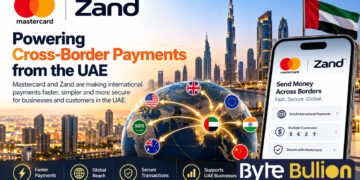



Mastercard and Zand cross-border payments in the UAE became a news topic on August 14, 2025, when the two companies announced a strategic collaboration to improve how money moves between countries. Zand is a digital-first financial services group in the United Arab Emirates, and Mastercard is one of the world’s largest payment networks. Their plan uses a Mastercard service called Mastercard Move to let Zand customers send money to bank accounts, mobile wallets, and cash pickup points abroad. This article explains what was announced, how Mastercard Move works, why the UAE is a key market for international transfers, what the announcement leaves open, and how people can send money across borders safely and at a fair price.
What Was Announced
According to Mastercard’s press release from Dubai, Zand and Mastercard signed a strategic agreement to enhance cross-border payment solutions. Zand will use Mastercard Move’s money movement solutions to offer international transfers to its customers. In the first phase, Zand plans to offer deposits into bank accounts and wallets in multiple markets, as well as cash pickup services. You can read the full text in Mastercard’s announcement.
The companies describe the deal as a step toward financial inclusion and a stronger digital economy in the region. J.K. Khalil, who leads Mastercard’s East Arabia division, said the collaboration will connect more people and businesses to the financial system. Michael Chan, the CEO of Zand, said the company was thrilled to help drive the future of cross-border payments.
Who Is Zand?
The press release describes Zand as an AI-powered fintech and financial services group in the UAE. Zand presents itself as a digital-first provider, which means customers use apps and online tools more than branches. For a company like this, adding international transfer services is a natural step, because many residents of the UAE send money to relatives and businesses in other countries.
We should note that the announcement gives few details about Zand’s customer numbers or fees for the new service. If you are a customer or plan to become one, check Zand’s own pages for current prices and rules.
What Is Mastercard Move?
Mastercard Move is the company’s service for sending money across borders and within countries. A report from PYMNTS describes it as a single integration point for person-to-person transfers, business payments, and disbursements. It says the service reaches more than ninety-five percent of the world’s banked population, and that it supports payouts to bank accounts, mobile wallets, and cards, with transfers also possible through cash pickup.
For a financial company, one connection to a network like this can be easier than building many separate links to banks and payment providers in different countries. That is why partnerships of this kind are common. The bank or fintech company focuses on its customers, while the network handles much of the routing behind the scenes. You can read the trade coverage in the PYMNTS report on the partnership.
Why the UAE Is a Big Market for Cross-Border Payments
The UAE has a large population of people who live and work there but come from other countries. Many send part of their earnings to families at home. Businesses in the UAE also pay suppliers, staff, and partners abroad. This creates strong demand for fast, clear, and affordable money transfers.
Digital services are well suited to this need. Customers want to see the exchange rate, the fee, and the delivery time before they send. They also want the recipient to be able to collect the money in a way that works for them, whether that is a bank deposit, a mobile wallet, or cash.
Financial Inclusion and Cash Pickup
The announcement emphasizes people who are unbanked in a broad sense, meaning those who have no bank account or limited access to banking. By offering cash pickup, a sender in the UAE can send money to a person abroad who does not have an account. The recipient visits a pickup location with identification and receives cash.
This can be a lifeline in places where bank branches are far away, and many people rely on cash. At the same time, cash pickup brings extra risks, such as fraud and mistakes in names or locations. Senders should be careful to share the transfer code only with the intended receiver.
Existing Uses of Mastercard Move in the UAE
The PYMNTS report notes that Mastercard Move is already used by other companies in the UAE. For example, Checkout.com uses it for insurance payouts, wallet cash-outs, and refunds. A separate Mastercard partnership with a company called Fundbot aims to simplify business-to-business payments between buyers and suppliers.
These examples show that the technology has wider uses than family remittances. Insurance companies can pay claims faster. Online marketplaces can pay sellers. Businesses can send refunds. In each case, speed and certainty matter.
What the Announcement Does Not Say
It is important to be clear about the gaps. The release names the UAE but does not list the other countries or markets that will be supported. It gives no launch date for the service, no pricing, no limits, and no timeline for later phases. It also does not say how many customers will use it.
Because of this, we cannot say what a transfer will cost or how fast it will arrive. The word “first phase” suggests that more features and markets may follow, but that is not a promise. Treat any claims about future services as plans, and check the providers’ pages for updates.
What Customers Should Compare Before They Send Money
Whenever you send money abroad, compare a few things. First, the exchange rate. Providers often add a margin to the market rate, which is a hidden cost. Second, the fee, which may be fixed or a percentage. Third, the speed, which can range from seconds to days. Fourth, the way the recipient gets the money. Fifth, the limits and the identity checks required.
Add the fee and the exchange margin together, and compare the total amount the recipient will receive. A transfer with a low fee but a poor exchange rate can cost more than one with a higher fee and a good rate. Also check refund rules in case a transfer fails.
Use Licensed and Regulated Providers
Money transfer is a regulated business. In the UAE, financial services are supervised by official bodies, and licensed providers must follow rules on customer identification, anti-money laundering, and consumer protection. When you choose a provider, check that it is licensed, that the app comes from the official store, and that the company has a clear address and support channel.
Be wary of informal channels that promise very low fees or very high rates. Unlicensed transfers can be risky, and in some cases may be illegal. If a transfer is stuck or lost with an unlicensed provider, you may have no way to get help.
Protect Yourself From Remittance Scams
Scammers target people who send money abroad. Common tricks include fake emergency messages from “relatives,” fake job offers that ask for upfront fees, fake prizes, and requests to pay a fee to release a parcel or a prize. Another trick is a message pretending to be from a bank, asking you to share a one-time code.
Never send money to someone you have not met in person because of a message that creates pressure. Confirm the request by calling the person on a number you already know. Do not share one-time codes or passwords. Use strong passwords and two-step login on your apps. For a simple guide on staying private when using digital services, read that article and apply its tips to your finance apps.
Business Payments Across Borders
Companies that pay suppliers abroad face other challenges. They need to manage exchange rates, verify bank details, and keep records for audits. A good provider offers clear tracking, fast confirmation, and the ability to pay in the receiver’s local currency. Businesses should also set approval rules, so that no single person can send large payments alone.
Watch the wider market for changes in currency rates, because a sudden move can affect your costs. If you pay in installments, consider locking the rate or splitting payments.
What This Means for the Industry
The Zand and Mastercard collaboration is part of a larger trend. Banks and fintech firms are partnering with global networks to offer cross-border services without building everything themselves. Customers benefit when competition lowers prices and improves speed. Regulators watch carefully to ensure safety, transparency, and fair treatment.
As more providers join, customers may see better tools, such as real-time tracking, clear fee breakdowns, and instant notifications. But the quality will depend on how each company designs its service and prices it.
Planning Your Transfers
If you send money abroad regularly, plan ahead. Set a monthly budget for transfers, so that you can compare costs over time. Send larger amounts less often, if fees are fixed, and check whether your provider offers rate alerts. Save receipts and confirmation numbers, and keep a list of your frequent recipients with verified details.
Ask recipients to confirm when they have received the money, and to tell you if anything looks wrong. A short message can solve many problems.
How to Judge a Transfer Service Over Time
Do not judge a money transfer service by one transaction. Track a few simple things across several months: how often transfers arrive on time, how quickly support answers questions, and how clear the fees are on the confirmation screen. Keep screenshots of each quote and compare them with what your recipient actually received. If the numbers do not match, ask the provider to explain the difference in writing.
It also helps to ask relatives and partners abroad about their side of the experience. They may face pickup delays, identity checks, or local fees that you never see. Their feedback can show whether a service works well from end to end, and not only in your app.
Conclusion
On August 14, 2025, Zand and Mastercard announced a collaboration that will use Mastercard Move to help Zand customers send money across borders, with first-phase services including deposits into bank accounts and wallets in multiple markets and cash pickup. The companies frame it as support for financial inclusion and the digital economy. The announcement does not name all markets, set a launch date, or share pricing, so customers should wait for details from the providers. Whenever you send money abroad, compare the exchange rate and fees, use licensed providers, verify the recipient, and stay alert for scams.
Cross-border payments are changing quickly, and partnerships like this one may bring faster and clearer services. Careful habits will help you use them well.
Frequently Asked Questions
1. What did Mastercard and Zand announce?
On August 14, 2025, they announced a strategic collaboration to improve cross-border payments, using Mastercard Move for transfers from the UAE.
2. What is Mastercard Move?
It is a Mastercard service for sending money to bank accounts, mobile wallets, cards, and cash pickup points, for people and businesses.
3. Which countries will Zand customers be able to send money to?
The announcement says multiple markets but does not name them. Check Zand’s pages for updates.
4. What fees will apply?
The release gives no pricing. Compare the fee and the exchange rate once the service details are published.
5. How can I send money abroad safely?
Use a licensed provider, compare total costs, verify the recipient, and never share one-time codes or passwords.