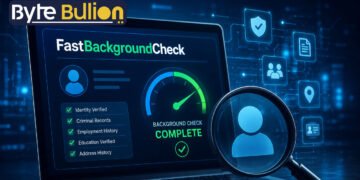



FastBackgroundCheck is a people search website that lets anyone look up a name, phone number, or address and pull up public records tied to that person. If you have ever searched your own name online and found a stranger’s website already listing your age, your relatives, and your old addresses, there is a good chance a site like this one is behind it. This article explains what FastBackgroundCheck actually does, how accurate it is, whether it is safe to use, and how you can remove your own information from it if you would rather not be listed.
What Is FastBackgroundCheck?
FastBackgroundCheck.com describes itself as a people search, reverse phone lookup, and address lookup service that gives users information instantly. The company says it combs through billions of public records to help people run quick background check searches without much hassle. On the surface, that sounds like a simple research tool. In practice, the site works by pulling together data that already exists in scattered public and third-party sources, then organizing it into one easy-to-read profile.
A typical search result includes a person’s full name, current and past addresses, date of birth, phone numbers, and possible relatives. This is standard for the people search industry, and FastBackgroundCheck is one of many companies operating in this space, alongside names like BackgroundChecks.com and Asurint. The business itself, FastBackgroundCheck.com, is based in Boulder, Colorado, and has been registered with the Better Business Bureau since December 2019.
How Does FastBackgroundCheck Get Its Data?
FastBackgroundCheck gathers and publishes personal data pulled from government records, online directories, and third-party databases. None of this information is secret or hacked. It comes from sources that are technically public, such as property records, court filings, voter registrations, and social media, but most people never expect it to be compiled into one searchable profile with their name attached.
This is an important distinction to understand. The site is not breaking any laws by collecting this data, since the records themselves are considered public. What it does is make information that used to take real effort to track down instantly searchable by anyone, for free or for a small fee.
Is FastBackgroundCheck Accurate?
This is where the site runs into trouble. Because FastBackgroundCheck pulls from multiple public and third-party sources rather than verifying each record directly, the information can be outdated, incomplete, or simply wrong. A person’s old address might still show up years after they moved. A relative listed on a profile might be a distant one, or even a case of mistaken identity between two people with similar names.
For this reason, most reviewers and consumer protection sites are clear that FastBackgroundCheck should never be treated as a source of truth for anything important. If you are trying to verify someone’s identity before a major decision, this kind of site should only be a starting point, not the final word.
Is FastBackgroundCheck Legal to Use?
Here is where FastBackgroundCheck differs from a real background check company. It is not a consumer reporting agency as defined by the Fair Credit Reporting Act, commonly known as the FCRA. That law regulates how background check data can be used for decisions about employment, housing, credit, and insurance. Because FastBackgroundCheck is not FCRA compliant, its data legally cannot be used to screen a job applicant, approve or deny a rental application, or make any other decision covered under that law.
This matters a lot in practice. If a landlord or employer uses information from FastBackgroundCheck to reject someone, that decision could violate federal law, even if the underlying information happens to be accurate. The site itself states clearly that it cannot be used for employment, credit, or tenant screening purposes.
So what is it legal for? Casual, personal use is the main intended purpose. People use it to reconnect with old friends, check a phone number that keeps calling them, or get a general sense of someone before meeting them in person, such as for online dating.
Common Reasons People Use FastBackgroundCheck
People turn to sites like this one for a range of everyday reasons, including:
- Verifying a new online dating match is a real person with a real identity
- Checking on a potential roommate or babysitter before trusting them
- Looking up an unfamiliar phone number that keeps calling or texting
- Reconnecting with old classmates, coworkers, or relatives
- Doing a basic safety check before meeting a stranger from an online marketplace
Used carefully, these are reasonable and common reasons to run a quick search. The key is remembering that the results are a starting point for your own judgment, not a certified legal document.
Privacy Concerns and Risks
The bigger conversation around FastBackgroundCheck centers on privacy rather than legality. Because the site publicly displays sensitive personal details without asking the person’s permission first, many people feel it crosses a line, even if the underlying data is technically public.
There are real risks tied to this kind of exposure. Someone with bad intentions could use a profile on FastBackgroundCheck to gather enough personal details to attempt identity theft, run a phishing scam, or even locate and harass someone. The FBI has repeatedly flagged phishing as one of the most common ways cybercriminals target victims, and having a name, address, phone number, and relatives listed in one place makes that kind of targeting easier.
This is why data removal services and privacy advocates frequently list FastBackgroundCheck among the “people search” sites worth opting out of, right alongside more well-known names like Spokeo and Whitepages.
Is FastBackgroundCheck Safe to Use?
From a technical standpoint, the site itself appears reasonably secure. It uses a valid SSL certificate, meaning your connection to the site is encrypted, and it has been an active, registered domain for years. Independent website scanners generally rate it as low to medium risk rather than flagging it as outright dangerous or a scam operation.
That said, “safe” and “trustworthy” are not quite the same thing. The Better Business Bureau has logged a notable number of complaints against the company over the past few years, with most centering on advertising practices and customer service issues rather than security breaches. Some users report that their information reappeared on the site even after successfully submitting an opt-out request, since FastBackgroundCheck periodically refreshes its database from new sources.
How to Remove Your Information From FastBackgroundCheck
If you would rather not have your personal details listed, FastBackgroundCheck does provide an opt-out process. Here is the general path most guides recommend:
- Go to FastBackgroundCheck.com and search for your own name to locate your profile.
- Open the correct listing and copy the URL or note the profile ID.
- Scroll to the bottom of the homepage and find the opt-out or “Do Not Sell My Info” link.
- Fill out the removal form with the requested details and submit it.
- Check your email for a confirmation link and click it to finalize the request.
Keep in mind that removal is not always permanent. Because the site continues to pull fresh data from public records and third-party sources, your profile can reappear later. Many privacy-conscious users choose to check back every few months, or they use a dedicated data removal service that monitors and repeats these requests automatically across dozens of people search sites at once.
Should You Trust the Results?
Whether FastBackgroundCheck is worth using really depends on what you are using it for. As a low-stakes way to double check a phone number or get a general sense of someone before a first meeting, it can be genuinely useful. As a tool for any decision that affects someone’s livelihood, housing, or finances, it falls short both legally and practically, since the data is unverified and the company itself says as much in its own terms of service.
The smartest approach is to treat any result from FastBackgroundCheck as a lead worth double checking elsewhere, not as a final answer. Cross reference anything important against a more reliable source, and remember that a listing on the site does not automatically mean the information is current or correct.
Conclusion
FastBackgroundCheck sits in a gray area that a lot of people search websites occupy. It is technically legal, built entirely from public records, and useful for casual lookups, reconnecting with people, or basic safety checks. At the same time, it is not accurate enough to rely on for serious decisions, and its business model depends on publishing personal details that most people never chose to share in this format. If you find your own information listed and would rather it was not public, the opt-out process is available, though you may need to repeat it over time. Used with a clear understanding of its limits, FastBackgroundCheck can be a helpful tool. Used without caution, it can just as easily become a privacy headache.
Frequently Asked Questions
1. Is FastBackgroundCheck free to use?
Basic searches often show a preview for free, but full detailed reports typically require a paid subscription or one-time payment.
2. Can I use FastBackgroundCheck for a job or rental application?
No. The site is not FCRA compliant, so its data cannot legally be used for employment, credit, or tenant screening decisions.
3. Will the person I search know I looked them up?
No. FastBackgroundCheck does not notify the person being searched, since it only compiles data that is already public.
4. How do I remove my information from the site?
Search your name, locate your profile, use the opt-out link at the bottom of the homepage, and confirm the request through the email you receive.
5. Is FastBackgroundCheck a scam?
No, it is a legitimate, registered business, though it has received complaints about billing practices and opt-out difficulty, so it is worth using with caution.
Find what’s next and explore more at Byte Bullion