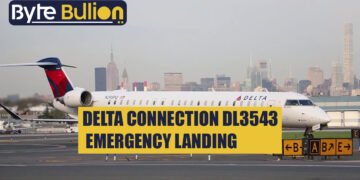



The Delta Connection DL3543 emergency landing took place on Monday, July 7, 2025, when a regional jet turned back to Minneapolis soon after takeoff and landed safely 37 minutes after it left. The first reports were short, so many travelers went online to learn what really happened. This guide puts the confirmed facts in one place. You will see how the flight unfolded, what the crew did, what the 7700 emergency code means, and who operated the plane. You will also learn which claims have no proof, because some websites have added details that no reliable source backs up.
What Was Delta Connection Flight DL3543?
Delta Connection flight DL3543 was a short regional flight from Minneapolis-Saint Paul International Airport (MSP) to Chicago Midway International Airport (MDW). The trip normally takes about one hour, so it is the kind of quick hop that business travelers and families take without a second thought.
Endeavor Air flew the plane for Delta. The aircraft was an Embraer 175 regional jet with the registration N259SY. The tracking site AIRLIVE lists the model as an Embraer 170-200, which is the official name for the jet most people call the E175.
Here are the key facts at a glance:
- Flight: Delta Connection DL3543
- Date: Monday, July 7, 2025
- Route: Minneapolis-Saint Paul (MSP) to Chicago Midway (MDW)
- Aircraft: Embraer 175, registration N259SY
- Operator: Endeavor Air, for Delta Air Lines
- Emergency code: Squawk 7700
- Landing: Runway 12R at MSP, 37 minutes after departure
- Injuries: None reported
What Happened on Delta Connection Flight DL3543?
The flight took off from Minneapolis and returned to the same airport only 37 minutes later after the crew declared an emergency. AIRLIVE, a flight tracking and aviation news site, shared the main steps as the event unfolded:
- Takeoff: DL3543 left MSP and headed toward Chicago.
- Climb stops: About 10 minutes after takeoff, the plane stopped climbing at 21,000 feet.
- Turn back: The crew turned the jet around toward Minneapolis.
- Emergency code: The pilots set the transponder to 7700 and asked for priority landing.
- Landing: The plane touched down on runway 12R, 37 minutes after it left.
- Parking: The jet then went to stand C12.
The whole event lasted less than 40 minutes from start to finish. Leveling off is a common first move when a crew sees a problem, because it gives the pilots time to check their systems without gaining more height. Then they can decide where to land. In this case, they chose the airport they had just left.
No reports mention injuries. Emergency vehicles often wait near the runway when a plane declares an emergency, and that is a normal safety step, not a sign that something went wrong after landing.
Why Did the Crew Declare an Emergency?
Delta and Endeavor Air have not shared a public cause that we could find, so the exact reason remains unconfirmed. Online reports disagree with each other. One article says the crew saw a pressurization system warning. A forum user said the plane had a flaps problem. Another site only says a technical alert came up. None of these claims comes with an official statement or a government report, so treat each one as a possible explanation and not as a fact.
Still, both ideas show why a quick return makes sense. A plane must keep steady air pressure inside the cabin at high altitude so that people can breathe normally. If a warning suggests that system is not working right, pilots follow a checklist and may descend to a lower, safer altitude. Landing soon is a careful choice.
Flaps work in a similar way. They change the shape of the wing so the plane can fly slowly enough to land. If a crew thinks the flaps may not work well, they want a long runway and a quick response from airport crews. In both cases, asking for priority handling is the right call.
Keep in mind that this is a general explanation. It is not a confirmed diagnosis of what happened on DL3543.
What Does Squawk 7700 Mean?
Squawk 7700 is the transponder code that tells air traffic control a plane has a general emergency. A transponder is a device on the aircraft that sends a four-digit code to radar. Controllers use that code to identify the plane and read its status on their screens.
Three codes are reserved for emergencies:
- 7500: Hijacking
- 7600: Radio failure
- 7700: General emergency
The 7700 code works as a catch-all. Pilots can use it for a medical problem, an engine problem, smoke, a fire, or a loss of cabin pressure. They can set it themselves, or air traffic control can ask them to do it.
When controllers see a 7700 code, they act fast:
- They give the aircraft top priority.
- They move or hold nearby traffic.
- They alert emergency services on the ground.
- They help the crew with directions and the quickest safe landing.
One aviation account puts it well: not every 7700 ends in an emergency landing, but controllers treat every one as serious. Flight DL3543 followed that pattern. The crew asked for help early, and the controllers cleared the way.
What Does “Emergency Landing” Really Mean?
An emergency landing means pilots land sooner than planned because a problem makes it unsafe or unwise to keep flying. The term sounds scary, but it does not mean the plane crashed or lost control.
Pilots can declare an emergency early to get help, even when the problem turns out to be small. This gives them space in the sky, a clear runway, and fire and rescue crews ready on the ground. Think of it like calling for help before a small problem becomes a big one.
Flight DL3543 fits that description. The crew had a problem, asked for priority, and landed on a normal runway at a major airport. Nobody reported injuries. That outcome is exactly what pilot training aims for.
Who Flew Delta Connection Flight DL3543?
Endeavor Air operated DL3543, and it is a wholly owned subsidiary of Delta Air Lines. Endeavor staffs, flies, and maintains the aircraft for Delta Connection flights. Delta schedules, markets, and sells the tickets.
Here are a few useful facts about Endeavor Air:
- Its headquarters sit on the property of Minneapolis-Saint Paul International Airport.
- The company started in 1985 as Express Airlines I.
- It took the name Endeavor Air on August 1, 2013.
Delta Connection is not one airline. It is a brand that covers regional flying. Besides Endeavor Air, two outside companies, Republic Airways and SkyWest Airlines, also fly under the Delta Connection name. That is why the plane may carry Delta colors while a different company supplies the pilots and flight attendants.
For passengers, this setup matters little on the day of travel. You buy a Delta ticket, you follow Delta rules, and Delta handles your rebooking if a flight turns back.
What Is the Embraer 175 Jet?
The Embraer 175 is a popular regional jet that carries about 70 to 76 passengers on Delta Connection flights. Delta says its E175 aircraft come in 70-seat and 76-seat versions, and many offer Wi-Fi for purchase.
Regional jets like this one connect smaller cities with big hubs. A route from Minneapolis to Chicago Midway is a good example. The plane flies short trips, often several times a day.
Like other airliners, the E175 has backup systems, and crews practice emergencies in flight simulators. A single warning light does not mean the aircraft cannot fly safely. It means the crew must follow a checklist and pick the safest plan, which is what the DL3543 pilots did.
After an event like this, airlines normally inspect the aircraft before it flies again. That is standard practice and not a sign of a bigger problem.
What Did Passengers Experience?
Reports say no one was hurt, and the passengers received help from airline staff after landing. Delta has not shared a passenger-by-passenger account that we could find, so details about each person’s trip are limited.
Here is what typically happens when a flight turns back:
- The crew speaks to passengers and explains the plan.
- The plane lands and parks at a gate.
- Airline staff check on passengers and answer questions.
- The airline books people on a later flight or another route.
If this ever happens to you, check the Delta app first. It often shows new flight options before the gate agent can speak with everyone. You can also ask a gate agent or call the airline’s customer service line.
Why Do Pilots Turn Back Instead of Flying On?
Pilots turn back because the nearest well-equipped airport is often the safest place to land. Several reasons support this choice:
- Long runways: Large airports have long, strong runways that give the crew extra room.
- Rescue crews: Big airports have fire and rescue teams that train for emergencies.
- Maintenance help: Airlines keep engineers at their hubs who can inspect the aircraft.
- Familiar airport: The crew already knows the weather, the runways, and the controllers.
- Passenger care: The airline can rebook passengers more easily at a hub.
Minneapolis checks every box. It is a major Delta hub, and Endeavor Air has its headquarters on the airport grounds. When DL3543 was only 10 minutes from takeoff, going back made more sense than flying on to Chicago.
Did Another Delta Flight Have an Emergency the Same Day?
Yes, a different Delta flight also had trouble on July 7, 2025, but the two events are not related. Delta flight 1334 was flying from Atlanta to Fort Lauderdale when a lithium battery in a passenger’s backpack caught fire. The crew put out the flames and stored the bag in a containment bag. The pilots then diverted the plane to Fort Myers, Florida, and landed safely. No injuries were reported.
The two events differ in several ways:
| Detail | DL3543 | Delta 1334 |
|---|---|---|
| Route | Minneapolis to Chicago Midway | Atlanta to Fort Lauderdale |
| Result | Returned to Minneapolis | Diverted to Fort Myers |
| Reported cause | Not confirmed | Lithium battery fire |
| Injuries | None reported | None reported |
Mixing up the two flights is common online. If you read a story about smoke, a backpack, or Fort Myers, it is about flight 1334. If you read about Minneapolis, Chicago, and runway 12R, it is about DL3543.
How Common Are Emergency Landings?
Emergency landings happen from time to time, and airlines and air traffic controllers train for them. Most end like DL3543 did, with a safe landing and no injuries.
Experts often point out that flying remains one of the safest ways to travel. Crews practice emergencies every year. Aircraft carry backup systems. Controllers know how to clear traffic and send help fast.
News stories can make these events feel more common than they are. A flight that lands safely rarely makes headlines, while a flight that turns back gets shared widely on social media. When you see a story like this, remember that the system worked as designed.
What Should You Do If Your Flight Has an Emergency?
Stay calm, listen to the crew, and follow their instructions right away. You will probably never face this, but a few habits can help:
- Keep your seat belt on: Wear it low and tight whenever you sit.
- Read the safety card: Look at the exit map and count the rows to the nearest exit.
- Pay attention to the briefing: Crew members share details that fit your specific aircraft.
- Follow brace instructions: If the crew tells you to brace, do it exactly as shown.
- Leave your bags: If the crew orders an evacuation, go without carry-on items.
- Keep your phone down: Filming can slow you and distract other people.
Crew members train for emergencies every year. If they ask you to do something, they have a good reason.
Which Claims About DL3543 Should You Doubt?
Be careful with any article that claims DL3543 changed airline rules or caused a major shift in safety policy. One website says this event is “rewriting the rulebook” for regional flight safety. That site offers no proof, and no reliable source we reviewed ties any FAA rule change to this flight.
You will also see small differences between websites. Some say the flight happened in the morning and others say afternoon. Some name a cause and others do not. When sources disagree, trust the ones that match flight-tracking data, such as AIRLIVE, and treat anything that sounds too certain with care.
To check any aviation story, you can:
- Look for statements from Delta, Endeavor Air, or the FAA.
- Search for flight-tracking records using the flight number and date.
- Check whether the article names its sources.
- Be wary of posts that predict big changes without evidence.
Conclusion
The Delta Connection DL3543 emergency landing was a short, safe event. On July 7, 2025, the Endeavor Air crew stopped the climb at 21,000 feet, turned back about 10 minutes after takeoff, set the 7700 emergency code, and landed in Minneapolis 37 minutes after leaving. No injuries were reported. The exact cause is still unconfirmed, so be careful with any website that claims to know it.
The main lesson is simple. Pilots train to act fast, controllers clear the way, and airports keep help ready. If you fly often, this story should give you more trust in the system, not less. For the latest facts on any flight, check Delta’s official channels and trusted flight-tracking sites.
FAQs
What caused the Delta Connection DL3543 emergency landing?
Nobody has confirmed the cause. Delta and Endeavor Air have not shared a public explanation that we could find. Some reports mention a pressurization warning, and one forum user mentioned a flaps issue. Treat both as unproven until Delta, Endeavor Air, or the FAA releases an official statement about the event.
Was anyone hurt on Delta Connection flight DL3543?
No injuries were reported. The Embraer 175 landed on runway 12R at Minneapolis-Saint Paul International Airport 37 minutes after it left, and passengers received help from airline staff after the landing. If you see a story that claims injuries or damage, check whether it names a reliable source.
What does squawk 7700 mean on a flight?
Squawk 7700 is the transponder code for a general emergency. Pilots enter it so air traffic control knows the aircraft needs priority. Controllers then move other traffic, alert emergency services, and help the crew land. The code can mean a medical issue, a technical problem, or smoke. It does not tell you the exact cause.
Who operated Delta Connection DL3543?
Endeavor Air operated the flight. It is a wholly owned subsidiary of Delta Air Lines, and its headquarters sit at Minneapolis-Saint Paul International Airport. Endeavor staffs and maintains the aircraft for Delta Connection flights, while Delta sells the tickets. The plane was an Embraer 175 with the registration N259SY.
Is it safe to fly on Delta Connection regional jets?
Yes, regional jets like the Embraer 175 follow the same safety rules as other airliners, and crews train for emergencies every year. The DL3543 crew handled its problem by turning back, asking for priority, and landing safely. Experts still call flying one of the safest ways to travel.