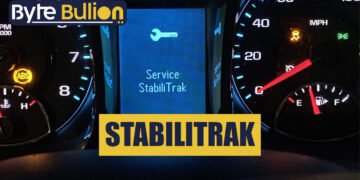



StabiliTrak is General Motors’ name for its electronic stability control system, and the “Service StabiliTrak” warning that appears on your dashboard is one of the more common alerts GM owners run into. If you drive a Chevrolet, GMC, Cadillac, or Buick and this message has just popped up, it is worth understanding what the system actually does, why the warning appears, and what steps make sense before you head to a mechanic. This guide covers all of that in detail.
What Is StabiliTrak?
StabiliTrak is GM’s proprietary version of electronic stability control, a safety system standard across most modern vehicles under various names. It works by continuously monitoring your vehicle’s speed, steering angle, and yaw rate, essentially how fast the car is rotating around its vertical axis, and comparing that data against what you are actually asking the car to do with the steering wheel.
When the system detects a mismatch, such as the car sliding in a direction different from where you are steering, it automatically applies braking force to individual wheels and adjusts engine power to help pull the vehicle back in line. This happens in a fraction of a second, often before a driver even fully registers that the car started to slip. StabiliTrak works alongside other safety systems, including the anti-lock brake system, traction control, and in newer vehicles, features like Lane Keep Assist and Forward Collision Alert, to keep the car stable during emergency maneuvers or on slippery roads.
It is worth knowing that “StabiliTrak” is a GM-specific brand name. Other manufacturers, including Toyota, Ford, and Volkswagen, have their own versions of essentially the same underlying technology, generally referred to more generically as electronic stability control or ESC.
What Does the “Service StabiliTrak” Message Mean?
When your dashboard displays “Service StabiliTrak,” it means the system has detected a fault somewhere and, in most cases, has disabled itself as a precaution. This is not a cosmetic glitch, since electronic stability control has been shown to prevent thousands of fatal single-vehicle crashes each year. An illuminated Service StabiliTrak light typically means you have lost the stability assistance the system normally provides, particularly during hard braking, sharp turns, or low-traction conditions like rain, snow, or ice.
You can usually still drive the car with this warning displayed, but you should expect the vehicle to handle differently. Without StabiliTrak active, you may notice reduced stability during sudden maneuvers, more frequent activation of the standard anti-lock braking system without the added coordination StabiliTrak normally provides, and in some cases, general performance changes if the fault also affects engine power delivery.
Common Causes of the StabiliTrak Warning
There is no single reason this warning appears. It can stem from a wide range of underlying issues, some minor and inexpensive to fix, others more involved.
Faulty Sensors
Sensor problems are among the most frequently cited causes. The system relies heavily on a handful of key sensors to do its job accurately.
Steering angle sensor. This sensor tells the system exactly how much you have turned the wheel. If it sends inaccurate or inconsistent data, or if the steering wheel itself is misaligned, StabiliTrak can lose confidence in the readings and shut itself off.
Wheel speed sensors. These sensors, also shared with the anti-lock brake system, measure how fast each individual wheel is spinning. A dirty, damaged, or failing wheel speed sensor can send faulty signals that trigger the warning.
Yaw rate sensor. This sensor measures how quickly the vehicle is rotating around its vertical axis, essentially detecting whether the car is spinning or sliding differently from where it is being steered. A malfunction here directly undermines the system’s core function.
Throttle position sensor. Since StabiliTrak sometimes needs to adjust engine power as part of its stability correction, a faulty throttle position sensor can interfere with that coordination and trigger the warning.
Low Battery Voltage or Electrical Issues
The StabiliTrak system requires consistent, stable electrical power to function correctly. Low battery voltage, corroded battery terminals, or a poor ground connection somewhere in the vehicle’s wiring can all cause the system to behave erratically or shut down and display the warning, even when the sensors themselves are working fine.
Low Brake Fluid
The stability control system relies on the brake system’s hydraulic pressure to apply targeted braking to individual wheels. If brake fluid is low, the system may not have the pressure it needs to function correctly, triggering the Service StabiliTrak message as a safety precaution.
ABS Module or Wiring Problems
Because StabiliTrak and the anti-lock brake system are closely linked, a failure in the ABS control module or in the wiring connecting these systems together often triggers both the StabiliTrak warning and the ABS warning light simultaneously.
Throttle Body Issues
Problems with the throttle body assembly can interfere with the system’s ability to manage engine power as part of a stability correction, which can prevent StabiliTrak from functioning as intended and trigger the warning message.
Tire Pressure Problems
Uneven tire pressure across the vehicle’s four tires can affect overall vehicle stability and, in some cases, trigger the warning, since the system’s calculations assume relatively even traction and rolling resistance across all wheels.
Engine Misfires
A misfiring engine can force StabiliTrak offline for safety, since the system depends on predictable engine power delivery as part of its stability corrections.
Signs and Symptoms That Often Accompany the Warning
The Service StabiliTrak message rarely shows up entirely on its own, and the other symptoms present alongside it can help narrow down the underlying cause.
- StabiliTrak light with the ABS light generally points toward an issue involving the anti-lock brake system specifically.
- StabiliTrak light with the Check Engine light suggests an engine performance issue is affecting the vehicle’s overall stability calculations.
- StabiliTrak light with the Traction Control light points toward a shared fault in the broader traction management system.
- Multiple warning lights appearing together often indicates a more general electrical issue rather than one isolated component.
- Reduced engine power, sometimes called limp mode, can accompany the warning if the underlying fault also affects throttle or engine management.
- Unexpected activation of stability control during normal driving can be a sign that a sensor is sending inaccurate data even before the warning light itself fully triggers.
How to Reset the StabiliTrak Warning
If the underlying issue is minor, a manual reset sometimes clears the warning, though it is important to understand this does not fix an actual mechanical or electrical fault, it simply clears the alert so the system can attempt to run again.
- Put the vehicle in park and turn off the engine completely.
- Turn the steering wheel fully clockwise until it stops, then turn it fully counterclockwise until it stops in the other direction.
- Wait about fifteen seconds.
- Restart the vehicle and check whether the warning has cleared.
If that manual reset does not work, some owners try briefly disconnecting the vehicle’s battery for several minutes to force a full system reset. This can sometimes clear minor electronic glitches, though it will also reset other vehicle settings, such as radio presets and clock time, so it is worth weighing that inconvenience against the benefit.
When to See a Mechanic
If the warning persists after a manual reset, or if it returns shortly after clearing, it is time for a proper diagnostic rather than continued DIY troubleshooting. A mechanic with GM-specific diagnostic equipment can pull the actual fault codes stored in the vehicle’s computer, which points directly to the specific sensor or component causing the issue rather than requiring guesswork.
Given that StabiliTrak is directly tied to vehicle safety during emergency maneuvers and slippery conditions, it is not a warning worth ignoring or driving with indefinitely. Repair costs for StabiliTrak issues generally fall somewhere between $200 and $550, depending on the specific cause, though prices can run higher if the fix involves a full control module replacement rather than a single sensor.
Should You Keep Driving With the Warning On?
This depends heavily on what triggered the warning and how confident you are in identifying the cause. If the warning appeared alongside other serious symptoms, such as reduced engine power, unusual noises, or noticeably different handling, it is safest to get the vehicle to a mechanic as soon as reasonably possible rather than continuing to drive it regularly.
If you have manually turned StabiliTrak off yourself using the vehicle’s stability control button, rather than the system disabling itself due to a fault, that is a different situation entirely. In that case, there is nothing wrong with the system itself, and you are free to continue driving as normal, simply without the added stability assistance until you choose to turn it back on.
Preventing Future StabiliTrak Issues
A few routine maintenance habits can reduce how often this warning shows up over the life of your vehicle.
Keep your tires properly inflated and check pressure regularly, since even a small pressure imbalance can occasionally trigger the system. Have your battery terminals checked and cleaned periodically, particularly if your vehicle is a few years old, since corrosion buildup is a common and easily preventable cause of electrical glitches. Address any wheel alignment issues promptly, since misalignment puts ongoing stress on the steering angle sensor. Finally, keep brake fluid at the proper level and have your brake system inspected during routine maintenance, since low fluid is one of the simpler, more overlooked triggers for this warning.
Conclusion
The Service StabiliTrak warning is GM’s way of telling you that its electronic stability control system has detected a fault and disabled itself as a safety precaution. Causes range from something as simple as low tire pressure or a loose battery terminal to more involved sensor or module failures that require professional diagnostic equipment to pinpoint accurately. While a manual reset sometimes clears minor glitches, a warning that returns or appears alongside other dashboard lights deserves a proper diagnostic rather than repeated at-home attempts to clear it. Given that this system plays a direct role in keeping your vehicle stable during sudden maneuvers and slippery conditions, treating the warning seriously rather than ignoring it is the safer choice for you and everyone else on the road.
Frequently Asked Questions
1. Is it safe to drive with the Service StabiliTrak light on?
You can usually still drive, but the vehicle may handle less predictably during sudden maneuvers or slippery conditions, so it is best to get it checked promptly rather than delay indefinitely.
2. Can low tire pressure really trigger the StabiliTrak warning?
Yes. Uneven tire pressure across the vehicle can affect the system’s stability calculations and trigger the warning message.
3. Will disconnecting my car battery fix the StabiliTrak warning?
It can sometimes clear minor electronic glitches, but it does not fix an actual sensor or mechanical fault, and it will also reset other vehicle settings like the clock and radio presets.
4. How much does it typically cost to fix a StabiliTrak issue?
Repair costs generally range from about $200 to $550, depending on the specific cause, though a full control module replacement can cost more.
5. Does turning StabiliTrak off myself mean something is broken?
No. If you manually disable it using the vehicle’s stability control button, the system itself is fine, and you can drive normally without stability assistance until you turn it back on.
Find what’s next and explore more at Byte Bullion